Arc flash labels in Canada: what goes on them and why engrave them
Arc flash labels in Canada: what CSA Z462 practice puts on the label, who supplies the study data, and why engraved phenolic beats vinyl in electrical rooms.
An arc flash label is the last thing an electrician reads before opening a panel. It tells them how much energy could be released, how close is too close, and what PPE they need on. If that label is faded, peeling or missing, the person opening the door is guessing.
In Canada, the reference for arc flash labelling is CSA Z462, Workplace Electrical Safety. The Canadian Electrical Code (CSA C22.1) also requires certain equipment to be marked to warn of shock and arc flash hazards. This post covers what normally goes on the label, where the numbers come from, and why a lot of facilities are moving from vinyl to engraved phenolic.
What goes on an arc flash label
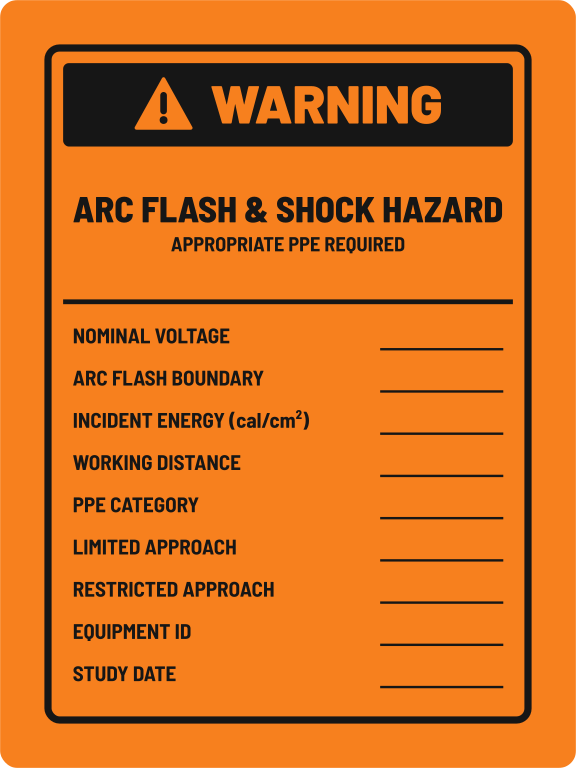
CSA Z462 sets the minimum content for equipment labels. The core items are:
- Nominal system voltage, for example 600 V or 208 V.
- Arc flash boundary, the distance at which a person could receive a second-degree burn if an arc flash happens.
- At least one of the following: the available incident energy and the working distance it was calculated at, or the arc flash PPE category, or the minimum arc rating of clothing, or a site-specific PPE level.
Most arc flash studies put more on the label than the minimum. Common additions:
- Limited and restricted approach boundaries for shock
- Equipment ID, such as the panel or MCC bucket name
- The date of the study or the assessment reference
- The signal word header, usually WARNING or DANGER
One rule people get wrong: when a label shows incident energy, it generally shouldn't also show a PPE category for the same equipment, because the two methods can give conflicting answers. Your study will tell you which one to use.
Who supplies the numbers
We want to be clear about this: we engrave arc flash labels, we don't calculate them. The incident energy, boundaries and PPE levels come from an arc flash risk assessment, usually done by a qualified electrical engineer or a firm that specializes in power system studies. They model the system, run the calculations and hand you a label schedule for each piece of equipment.
Send us that schedule, as a spreadsheet, PDF or a photo of the existing labels, and we'll lay out each label to match. If your study firm has a preferred label format, we'll follow it. If they don't, we'll set it up in a clean, readable layout and send a proof.
Why engraved phenolic instead of vinyl
Most arc flash labels start life as printed vinyl stickers because they're easy to run off a printer after the study. The problem shows up later. Electrical rooms get hot. Mechanical rooms get oily. Plants get dusty and get pressure washed. Printed labels fade, the laminate lifts at the corners, and the adhesive lets go.
An engraved lamacoid works differently. The letters and numbers are cut through the top colour layer into the contrasting core. There's no ink sitting on the surface to rub off, and a cleaning rag or solvent wipe doesn't take the text with it. Phenolic is also rigid and non-conductive, and it can be mounted with screws or rivets so it doesn't depend on adhesive holding up in the heat.
Engraving isn't the answer for every situation. If your labels change every few months, a printed label might make more sense until the system settles. But for switchgear, MCCs and distribution panels that'll run for years between studies, an engraved label that stays readable the whole time is worth it.
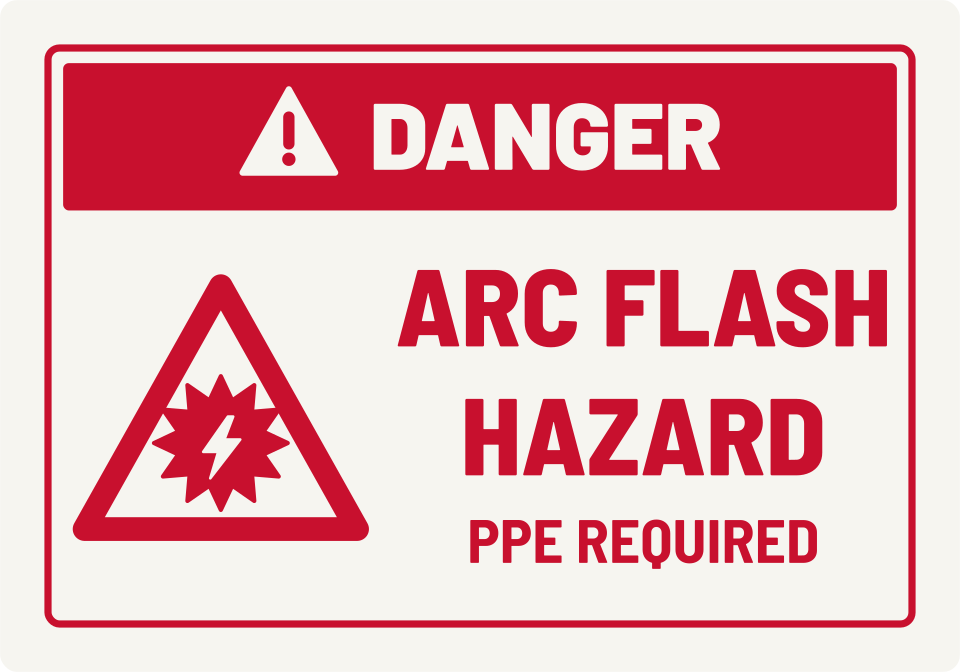
Blank-field vs fully engraved labels
There are two ways to set up an engraved arc flash label program.
Fully engraved, one per piece of equipment
Every label is engraved with its own data from the study: voltage, boundary, incident energy or PPE category, equipment ID, date. This is the most durable option and the easiest to read. It also means that when the study is updated, you replace the plates that changed. Because we engrave each label individually, a mixed batch of different data isn't a problem.
Engraved template with blank fields
The header, hazard statement and field names are engraved, and the data fields are left open. It's sometimes used as a stopgap while a study is in progress. The weak point is whatever fills the blanks. Marker and paint pen don't last long in the same conditions that kill vinyl labels. If you go this route, plan to replace them with fully engraved labels once the study is done.
| Option | Best for | Watch out for |
|---|---|---|
| Fully engraved | Finished studies, long-term installs, harsh rooms | New plates needed when study data changes |
| Engraved template, blank fields | Studies in progress, temporary marking | Hand-written data fades and smudges |
When labels need to change
CSA Z462 expects the arc flash risk assessment to be reviewed periodically and updated whenever the electrical system changes: a new transformer, a utility change, different protective devices, changed settings. When the numbers change, the labels have to change too. A label with the wrong incident energy is arguably worse than no label, because people trust it.
Keep your label schedule with the study. When the engineer issues an update, send us the changed rows and we'll engrave replacements.
Ordering arc flash labels
Here's what helps us quote fast:
- The label schedule from your study, with one row per piece of equipment
- The label size you want, or the space available on the equipment
- Signal word (WARNING or DANGER) if the study specifies it
- Mounting: adhesive, pre-drilled holes for screws, or rivets
- Quantity and any deadline
See ready-made layouts on the arc flash labels page, and pair them with high voltage signs and electrical room signs for the rest of the room. For panel tags, breaker ID and nameplates, the main Llamacoids site covers electrical ID. Send your schedule through the quote page or call 289-275-9572. We engrave in Burlington, Ontario, and most jobs go out same day.
FAQ
Frequently asked questions
What information goes on an arc flash label?
Under CSA Z462 practice, an arc flash label typically shows the nominal system voltage, the arc flash boundary, and either the available incident energy with its working distance or the arc flash PPE category. Many labels also include shock approach boundaries, the equipment ID and the study date. Your arc flash study sets the exact content.
Can Llamacoids calculate the incident energy for my arc flash labels?
No. The numbers on an arc flash label come from an arc flash risk assessment done by a qualified engineer or electrical safety firm. We engrave the label using the data from that study.
Are engraved arc flash labels better than vinyl?
Engraved phenolic has no ink or printed surface to wear off, and it can be screwed or riveted in place instead of relying on adhesive. That makes it a good fit for hot, dusty or oily electrical rooms where printed labels tend to fade or peel.
How often do arc flash labels need to be updated?
CSA Z462 calls for the arc flash risk assessment to be reviewed periodically and updated when the electrical system changes. When the study data changes, the label needs to change with it. Check the review interval in the edition your site follows.