High voltage signs: which signal word, what wording, and where they go
A practical guide to high voltage signs in Canada: when to use DANGER, WARNING or CAUTION, how to state the voltage, where signs go and how to mount them.
A high voltage sign has one job. It has to stop someone before they open the door, climb the fence or reach into the gear. Everything about the sign, from the signal word to the size of the letters to how it's fastened, should serve that job.
This guide covers the choices that come up when you order one: which signal word to use, what the wording should say, where the signs go and how to mount them so they're still there in ten winters.
Pick the right signal word
Most high voltage signs in Canada follow the header layout from ANSI Z535.2, with the colours and symbols lining up with CSA Z321 and ISO 7010. The signal word at the top tells the reader how bad it gets.
| Signal word | Colour | Use it when | Typical high voltage example |
|---|---|---|---|
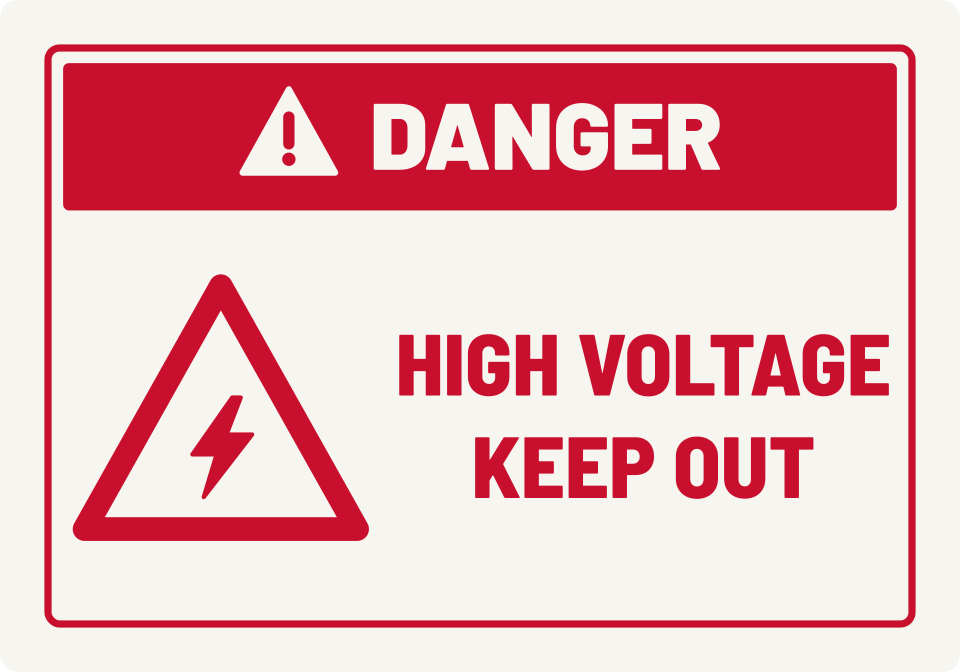
| DANGER | Red header | Contact or entry will kill or seriously injure | Substation fence, transformer vault door, open switchgear |
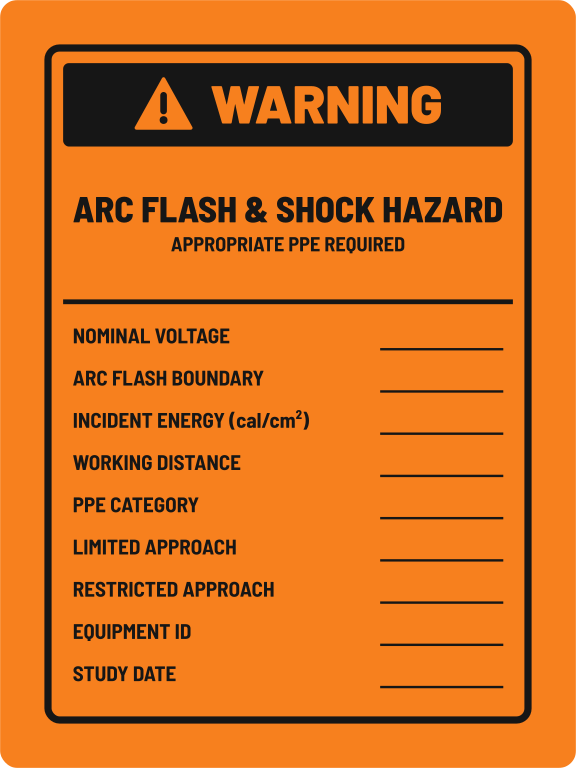
| WARNING | Orange header | Could kill or seriously injure | Guarded equipment, enclosures that need tools to open |
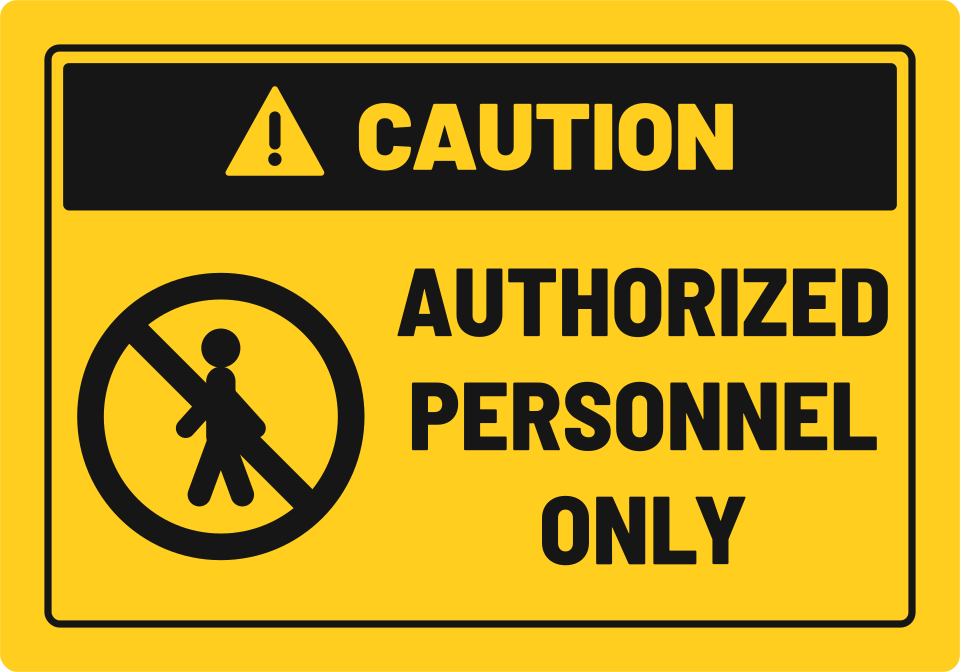
| CAUTION | Yellow header | Could cause minor or moderate injury | Low-voltage control panels, 120/208 V equipment covers |
The mistake we see most is a CAUTION sign on something that deserves DANGER. Yellow reads as "be careful." Red reads as "stop." If a person who ignores the sign can die, it should be red.
If you want the long version of how these three words differ, read Danger vs warning vs caution signs.
When WARNING makes sense
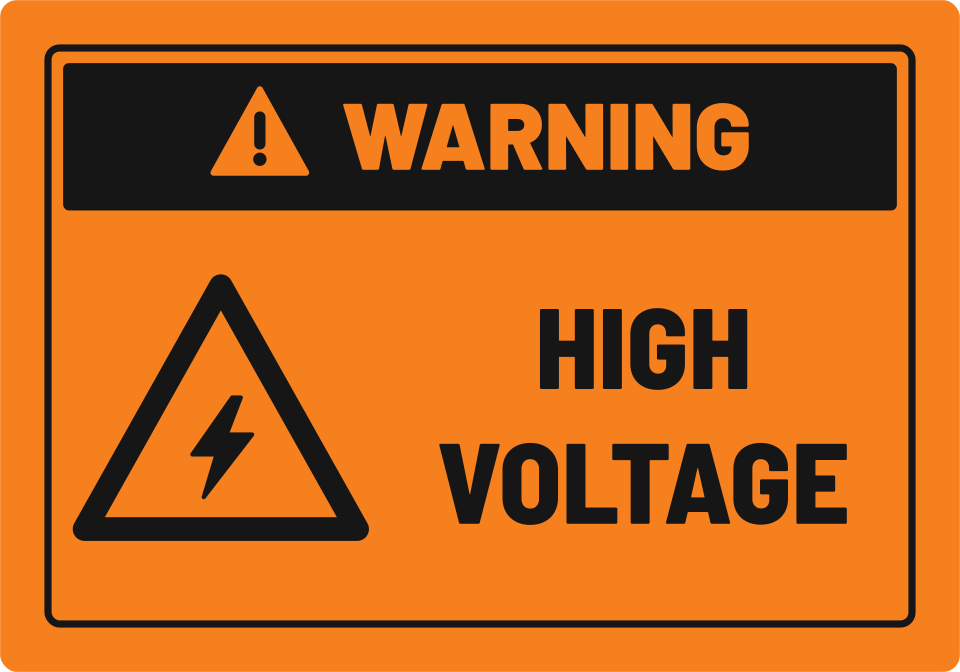
WARNING sits in the middle. It works well on enclosures that are locked or bolted, where the hazard is real but a person has to take a deliberate step to reach it. A lot of facilities use WARNING HIGH VOLTAGE on MCC doors and DANGER HIGH VOLTAGE on the room or vault door. That's a reasonable scheme, as long as it's applied the same way across the site.
Say the voltage, not just "high"
"High voltage" means different things to different people. To an electrician it might mean anything over 750 V. To a cleaner it means "don't touch." The fix is to put the number on the sign.
- 600 V for low-voltage distribution, MCCs and most industrial panels
- 4,160 V for medium-voltage motors and switchgear in larger plants
- 13.8 kV or 27.6 kV for utility-fed services and primary switchgear. 27.6 kV is a common distribution voltage in Ontario.
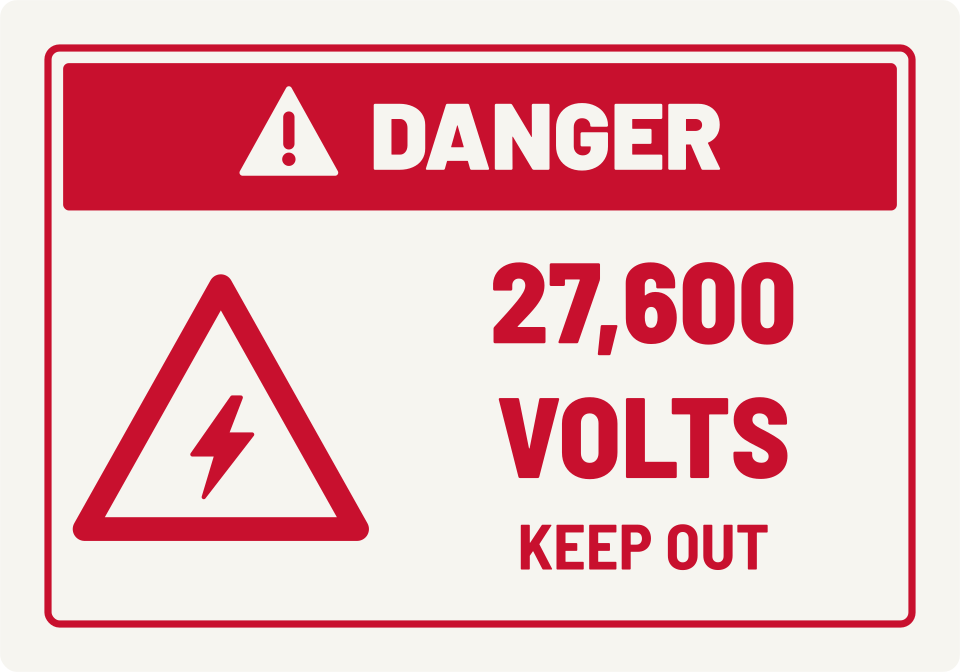
Keep the rest of the wording short. The signal word, the hazard and the action. "DANGER / HIGH VOLTAGE / KEEP OUT" works. So does "DANGER / 27,600 VOLTS / AUTHORIZED PERSONNEL ONLY." Long sentences don't get read.
Where high voltage signs go
Think about every way a person can approach the hazard. A sign on one side of a fenced yard does nothing for someone coming from the other side.
- Substations and fenced yards. On every gate, and on the fence at regular intervals so one is visible from any approach.
- Switchgear and electrical rooms. On the outside of the door at eye level, not on the part that swings out of view. See electrical room signs for the rest of what goes on that door.
- Transformer vaults. On the vault door and any access hatch.
- Pad-mount transformers and outdoor enclosures. On each access side.
- Equipment doors. On switchgear sections, MCC buckets and disconnects where live parts sit behind the door.
Mount at eye level where you can. A sign at knee height on a fence gets hidden by snow and weeds. A sign above a door frame gets missed by someone looking at the handle.
Mounting outdoors
Outdoor high voltage signs take a beating. Sun, freeze-thaw, road salt, snow plows and the odd hockey puck. A few practical rules:
- Fasten mechanically. Screws, rivets or stainless hardware through pre-drilled holes. Adhesive alone lets go on cold metal and chain-link.
- Drill four corners on larger signs. Two holes lets the sign pivot and crack in wind.
- Use stainless or galvanized hardware so rust streaks don't cover the text.
- On chain-link, use fence ties or backing plates through the holes rather than wire twisted around the sign.
Tell us the surface when you order and we'll drill the holes to suit. If you're not sure what material is right for your exposure, ask. We'll give you a straight answer rather than guess.
Why engraved instead of printed
A printed or vinyl sign carries the message in a thin layer of ink or film on the surface. When that layer fades, peels or gets scraped, the message goes with it.
An engraved lamacoid is a two-layer plastic sheet. The engraving cuts through the top colour and exposes the core, so the letters are part of the plate itself. There's no ink to fade off and no film to peel. That's why engraved signs are the default in a lot of electrical rooms and substations. For a side-by-side comparison, see how to order lamacoid safety signs.
What to send when you order
You'll get the right sign on the first try if you send us:
- The signal word (DANGER, WARNING or CAUTION)
- The exact wording, including the voltage
- The size, or the space it has to fit
- The mounting: holes, adhesive or both, and the surface it's going on
- Quantity, and whether any signs need different text
You can mock one up in the sign builder, browse ready-made layouts on the high voltage signs page, or order a ready-made one from the shop. We make engraved high voltage signs in Burlington, same day on most orders. For panel and breaker lamacoids that go inside the gear, see the main shop at llamacoids.ca.
Ready to go? Build it and order online or call 289-275-9572.
FAQ
Frequently asked questions
Should a high voltage sign say DANGER, WARNING or CAUTION?
Use DANGER where contact or entry will kill or seriously injure someone, such as exposed energized conductors, substations and transformer vaults. Use WARNING where the hazard could cause serious injury but is guarded or less immediate. CAUTION is for lower-severity hazards and is usually the wrong call for exposed high voltage. Your site standard and the authority having jurisdiction have the final word.
Do I need to put the actual voltage on a high voltage sign?
It is good practice and many site standards require it. A sign that reads DANGER 27,600 VOLTS tells a worker far more than DANGER HIGH VOLTAGE. Check your site standard, the current Canadian Electrical Code and your utility or ESA inspector for what applies to your installation.
Can an engraved lamacoid high voltage sign go outdoors?
Yes, engraved phenolic signs are commonly used outdoors on fences, gates and enclosures. For outdoor installs, mount with screws or rivets rather than adhesive alone, and ask us about material options for the exposure you have.
How fast can I get a custom high voltage sign made?
Llamacoids offers same-day turnaround on most engraved sign orders out of Burlington, Ontario. Call 289-275-9572 or send a quote request with the wording, size and mounting.