Safety sign colours in Canada: what red, yellow, blue and green mean
Safety sign colours in Canada explained: what red, yellow, orange, blue and green mean under CSA Z321 and ISO 3864, and which lamacoid colour pair to order.
Colour is the first thing anyone reads on a safety sign. Before the words register, the brain has already sorted it: red means stop, yellow means watch it, green means help is here. That only works if everyone on site is using the same colours for the same things.
In Canada, the reference for workplace sign colours is CSA Z321, Signs and Symbols for the Workplace. It follows the same logic as the international standard ISO 3864, so a sign that makes sense in Burlington makes sense on equipment from Germany or Japan. Many sites also use the American ANSI Z535 signal word system, which adds orange for WARNING. Here's how it all fits together, and which engraved colour pair to order for each.
The safety colours and what they mean
Red: prohibition, danger, fire
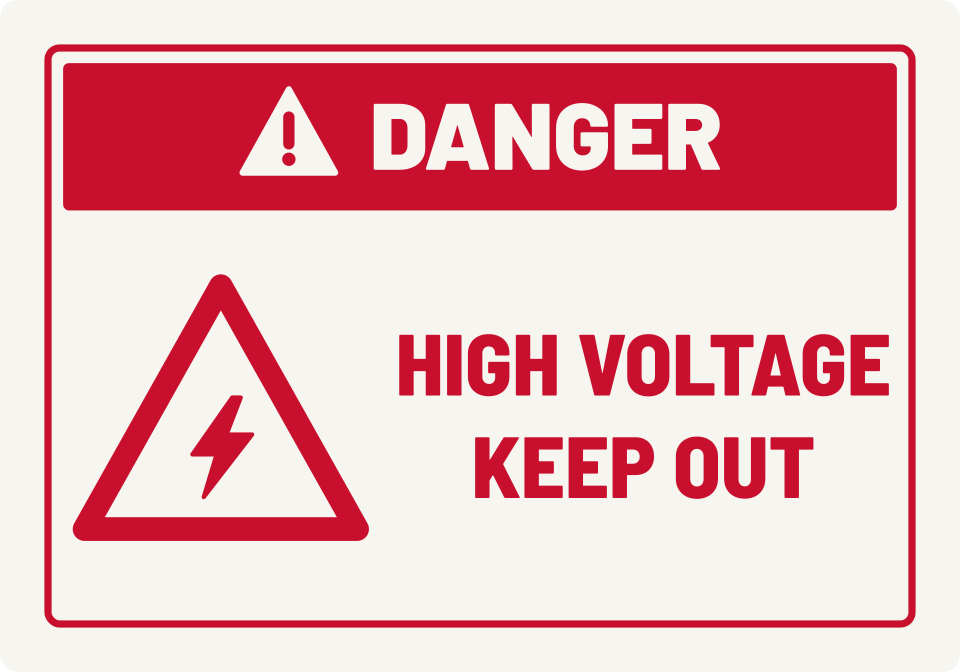
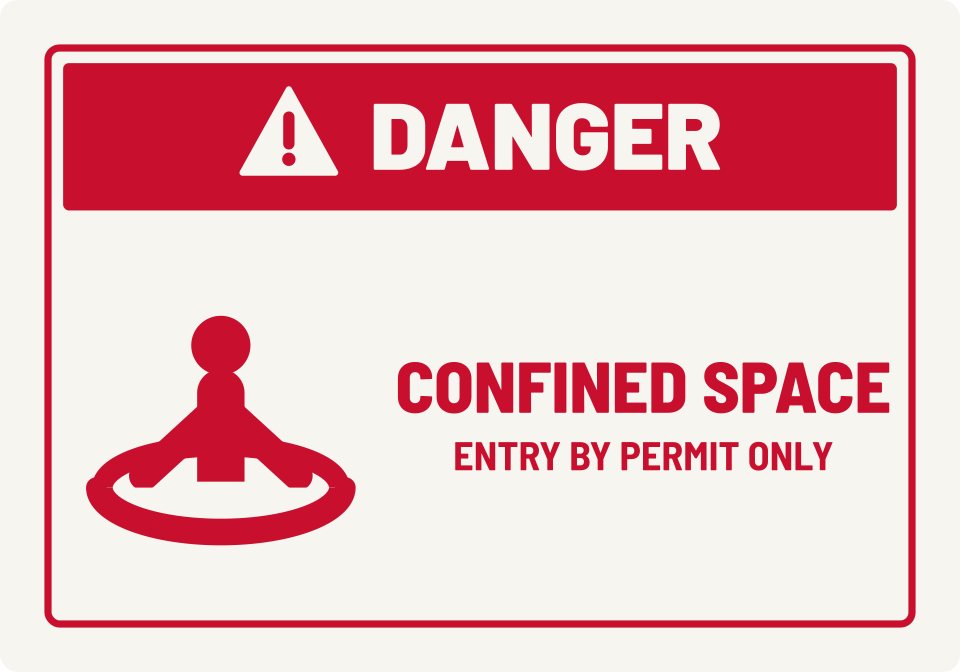
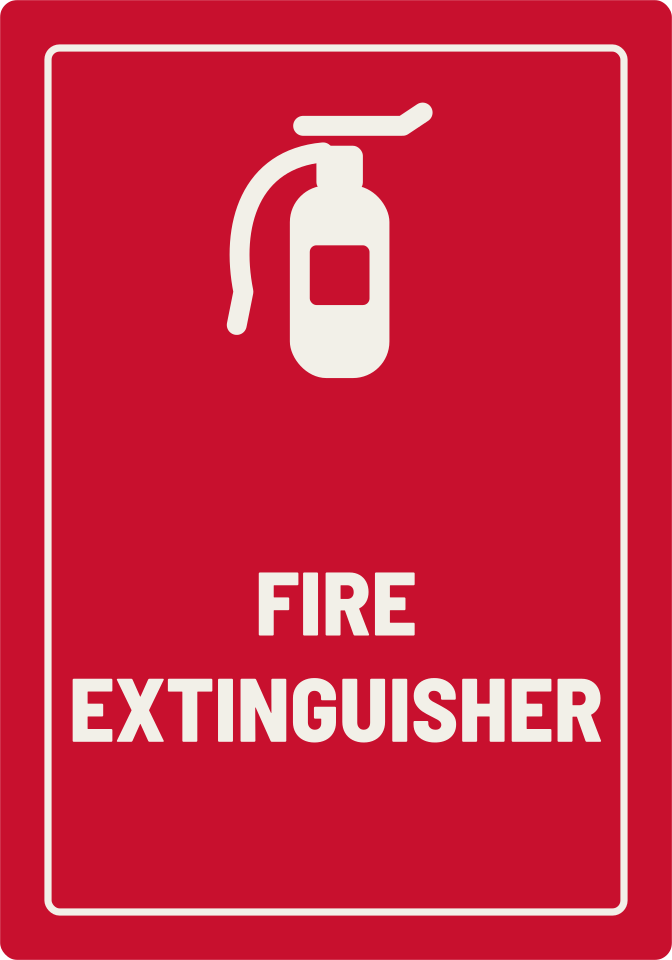
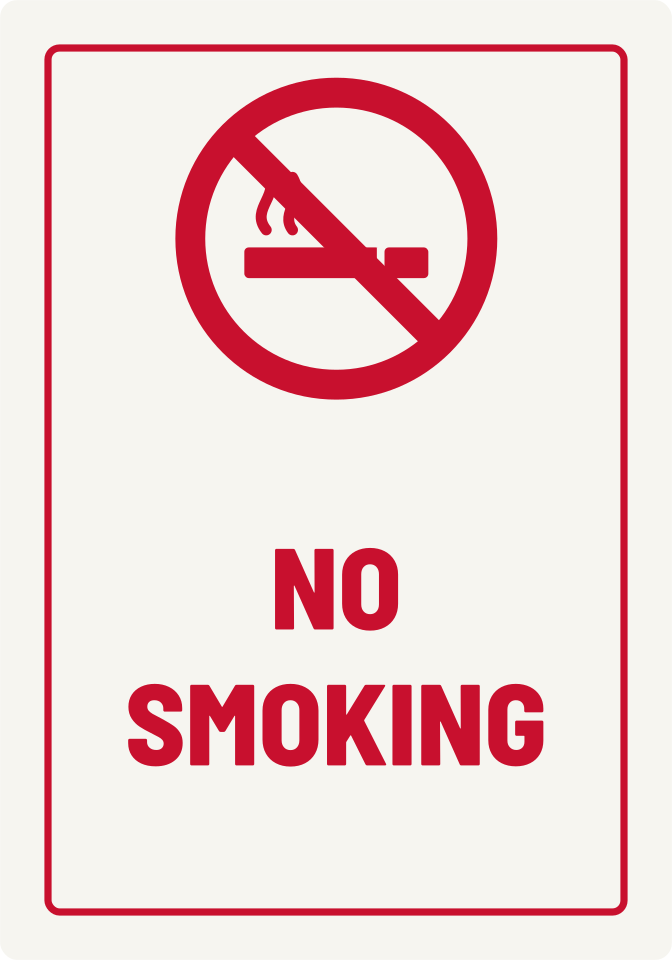
Red is for things you must not do and for fire equipment. It's the ring and slash on a no smoking sign, the background on a fire extinguisher sign, and the header on an ANSI DANGER sign. White is the usual contrast colour.
Yellow: caution and hazard
Yellow with black is the warning triangle in CSA Z321 and ISO 3864, and it's the CAUTION header in ANSI Z535. It's used for hazards like electricity, hot surfaces, moving equipment and pinch points. Yellow and black is one of the highest-contrast pairs you can put on a wall, which is why it's used where people need to notice something fast.
Orange: warning (ANSI)
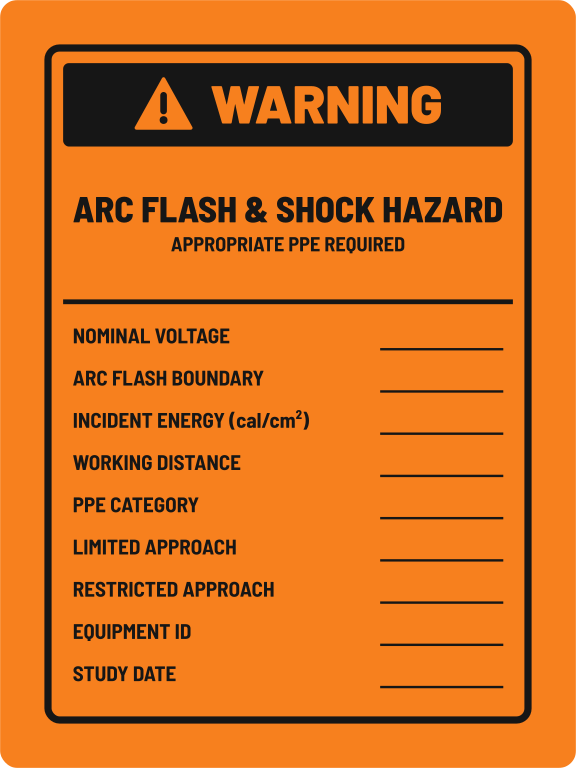
Orange sits between red and yellow in the ANSI Z535 system. It's used for WARNING signs, where a hazard could cause death or serious injury but isn't certain to. You'll see it on arc flash labels and on a lot of North American machinery. The ISO colour system doesn't have a separate orange sign category.
Blue: mandatory action
A blue circle means you must do something: wear hearing protection, wear safety glasses, wear a hard hat. In the ANSI system blue is also used for NOTICE signs, which cover site rules and information not related to personal injury.
Green: safe condition
Green marks first aid, eyewash stations, AEDs, emergency exits and muster points. It tells people where to go when something goes wrong.
Black and white: information
Black and white are for general information and equipment identification. Most electrical ID tags and panel lamacoids are black/white or white/black for this reason. They say what something is, not that it's dangerous.
Shapes matter too
CSA Z321 and ISO 7010 pair each colour with a shape, so the sign still reads even for someone who's colour blind or reading it in bad light:
- Triangle (yellow, black border): warning of a hazard.
- Circle with slash (red on white): prohibition.
- Solid circle (blue): mandatory action.
- Square or rectangle (green or red): safe condition or fire equipment.
On an ANSI-style sign, the rectangle with a coloured header does the same job. A lot of Canadian sites mix the two: an ANSI header and a CSA or ISO style pictogram below it.
Mapping safety colours to lamacoid colour pairs
An engraved lamacoid is two layers: a coloured surface and a contrasting core. The engraver cuts through the surface to expose the core, so letters and symbols come out in the core colour. The first colour in the name is the background, the second is the engraving. Yellow/black means a yellow sign with black letters.
| Lamacoid colour pair | Safety meaning | Use it for |
|---|---|---|
| Yellow / Black | Caution, hazard | CAUTION signs, high voltage, hot surface, pinch point, forklift traffic |
| Orange / Black | Warning (ANSI) | WARNING signs, shock hazard, moving machinery |
| Red / White | Danger, fire equipment | DANGER signs, fire extinguisher, fire alarm, solar PV disconnects |
| White / Red | Prohibition | No smoking, no open flames, no vaping, no entry |
| Blue / White | Mandatory, notice | Hearing protection, safety glasses, NOTICE signs, authorized personnel only |
| Green / White | Safe condition | First aid, emergency eyewash, AED location |
| Black / White | Information | Equipment ID, panel tags, room names |
One thing to know: a standard lamacoid is two colours. A full-colour ANSI sign with a red header, a white body and black text is three colours, so an engraved version gets designed around the pair. For DANGER, that usually means a red plate with white engraving and a white header band. For CAUTION, a yellow plate with a black header band and black letters. It reads the same way and holds up far longer than print.
When the colour is specified for you
Sometimes you don't get to choose. The Canadian Electrical Code (CSA C22.1) sets marking requirements for some equipment, and solar PV disconnect signage is the classic example where red with white letters is called out. Arc flash labels usually follow the format set by your engineering study and CSA Z462 practice. Your employer's safety program, the equipment manufacturer or the inspector might also set colours.
Picking your colours for an order
If you're signing a whole building, start with a list: each hazard, its signal word, and where it goes. The colour follows from the signal word. Caution signs go yellow/black, danger signs red/white, PPE signs blue/white, first aid green/white, no smoking white/red. Keep it consistent from room to room so people learn the system.
You can try colour pairs on a mock-up in the sign builder, or browse ready-made designs on the caution signs, fire safety signs and first aid signs pages. Our guide to danger vs warning vs caution covers picking the signal word. For panel tags and general ID, the main Llamacoids site has the full range. When you're ready, build it and order online or call 289-275-9572. We engrave in Burlington, and most orders ship same day.
FAQ
Frequently asked questions
What colour is a caution sign?
A caution sign is yellow with black text and symbols. Yellow means hazard or caution under both CSA Z321 and the ISO 3864 colour system, and the ANSI Z535 CAUTION header is yellow with black letters.
What do the safety sign colours mean in Canada?
Red means prohibition, danger or fire equipment. Yellow means caution or a hazard. Blue means a mandatory action. Green means a safe condition, first aid or emergency equipment. Orange is used for WARNING signs in the ANSI Z535 system. Black and white are for general information.
What lamacoid colour should I order for a warning sign?
For a yellow caution or hazard sign, order yellow/black (yellow surface, black engraving). For danger or fire equipment, red/white. For mandatory PPE signs, blue/white. For first aid and eyewash, green/white. For no smoking and other prohibition signs, white/red.